Can milka chocolate melt if water gets into the batch?
People always find it surprising. A few drops of water get into the batch, and the batch immediately goes awry. You likely have or will face this problem if you use milka chocolate for home baking or coating work. It feels completely out of proportion to the amount of water involved. This is why understanding is worth doing instead of cursing.
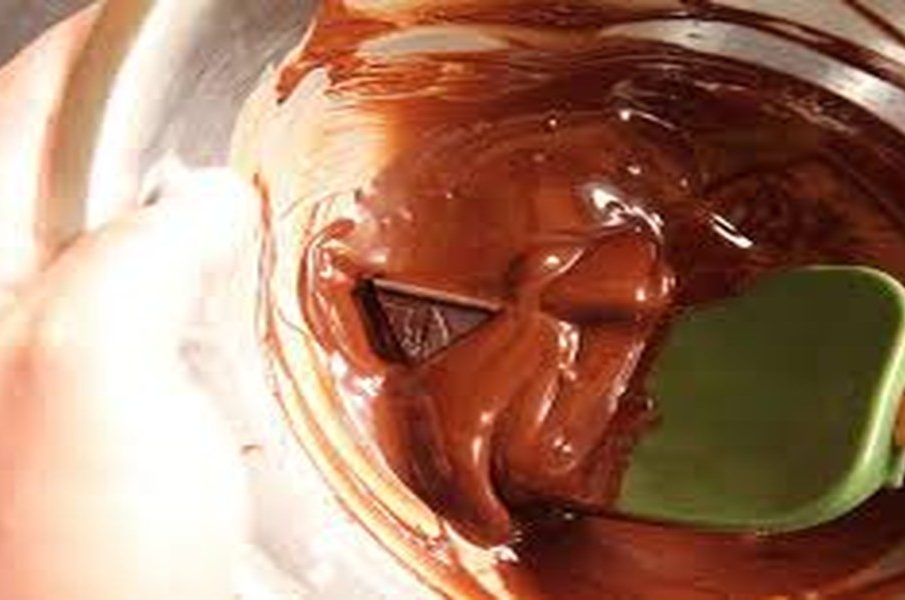
Melted chocolate is not a simple liquid. What looks like a smooth fluid is actually cocoa particles and sugar held in suspension inside a fat matrix of cocoa butter and milk fat. That suspension works because fat is the continuous phase holding everything else in place. The moment water enters, it does not blend in. It targets sugar directly, and what follows from that single interaction is what ruins the batch.
- Sugar particles that were sitting suspended in fat encounter the water and begin dissolving into it instead, pulling away from the fat matrix.
- The dissolved sugar becomes a localised syrup, and that syrup has a stickiness that free suspended sugar does not.
- Cocoa particles start clumping through that syrup rather than floating independently through the surrounding fat.
- Within seconds, the batch seizes, going from fluid to a dense, grainy paste that resists stirring and reheating equally.
- Fat migrates outward toward the surface of the seized mass, leaving behind a texture that somehow manages to look both greasy and dry at the same time.
Removing the risk before it arrives
Correction after seizing is limited and inconsistent. Prevention is straightforward if treated as non-negotiable from the start:
- Every bowl, spatula, and mould needs to be completely dry before any chocolate makes contact. One droplet on a utensil is enough to start the process.
- Steam rising from a double boiler is one of the most common water sources and one of the easiest to overlook. Keeping the water below a simmer and making sure the bowl sits above rather than touching the water reduces this substantially.
- Ambient humidity matters during extended melting periods. A well-ventilated workspace and keeping melting time short both reduce how much moisture the batch is exposed to through air contact alone.
- Covering the batch between active uses limits ongoing air exposure in humid conditions without adding any complication to the process.
When the batch has already seized?
Getting back to workable chocolate from a seized state is not possible. The suspension that existed before is gone. What can be done:
- Adding warm cream gradually while stirring converts the seized mass into a smooth ganache that works for truffles, tart fillings, or similar applications.
- Warm neutral fat introduced slowly can restore enough fluidity for some coating uses, though bloom afterwards is likely since temper will not survive the process.
Water and chocolate produce a structural failure, not just a texture problem. Treating moisture control as the first step rather than an afterthought keeps the most common and most frustrating mistake in chocolate work from happening at all.